
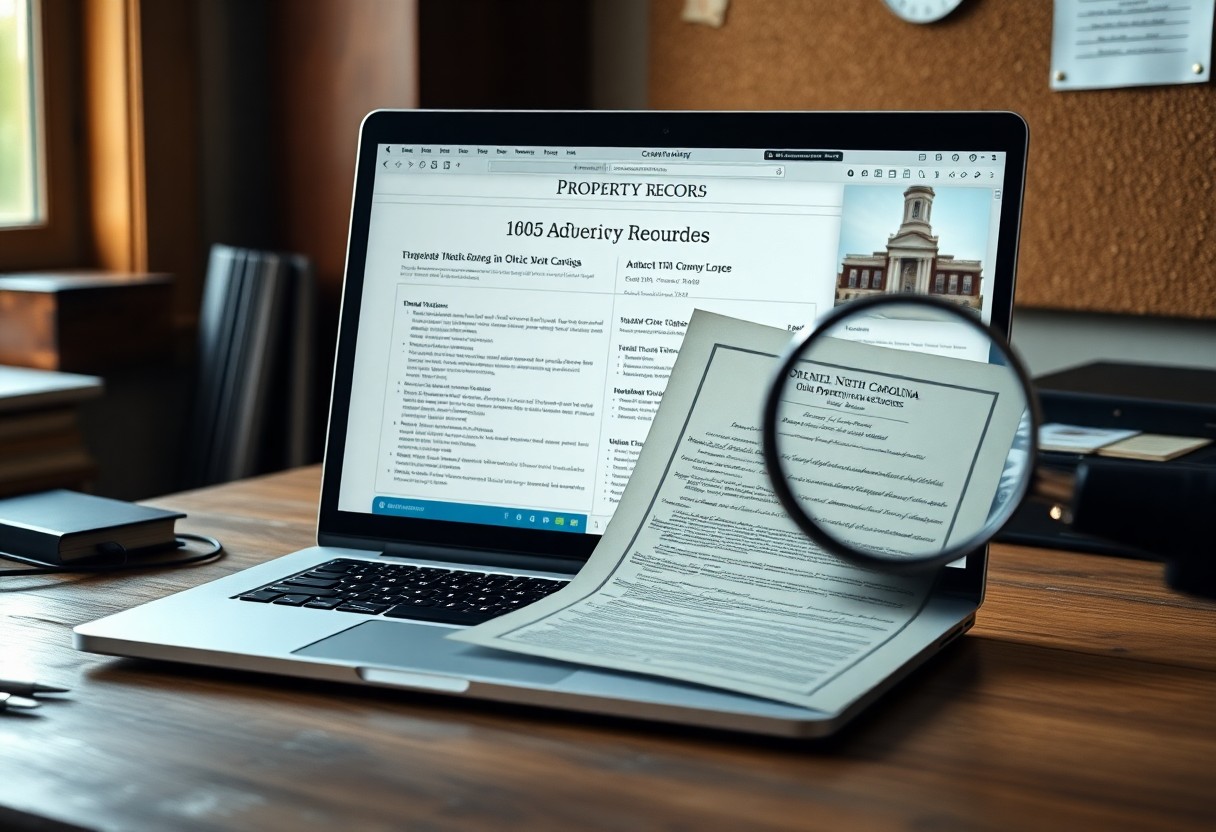
Over the years you can trace historical property ownership in North Carolina online using county registries, deed indexes, and state archives; this guide shows which sources and search techniques you should use.
Digital Repositories for NC Land Records
Digital repositories hosted by state and local sites let you search deeds, plats, and indexes online, often with free access or small fees; you can pull historical grantor-grantee chains and download document images for your research.
County Register of Deeds Remote Access Sites
Many county Register of Deeds portals let you search indexes, view recorded documents, and order certified copies; you’ll encounter varying fees and registration rules across counties.
North Carolina State Archives Digital Collections
State Archives’ digital collections include land grants, historical plats, and early deed books you can browse or download, often with searchable indices and finding aids to speed your work.
Accessing the Archives, you can request high-resolution scans, consult detailed catalog entries, and email archivists for roll numbers or citation help, which is helpful when county records are incomplete or predate formal recording.
Navigating the Consolidated Real Property Index
The Consolidated Real Property Index (CRPI) gives you a centralized index of deeds and transfers across counties, letting you locate entries by name, parcel, or instrument type; you can quickly spot historical ownership chains and follow references to original deed books for detailed records.
Utilizing Grantor and Grantee Search Parameters
Search grantor and grantee fields using exact, begins with, or contains options so you can trace transfers and split interests; combine name searches with year ranges to narrow results and note alternate spellings or married names when reviewing older entries.
Interpreting Historical Deed Book and Page Notations
Deed book and page citations tell you where original documents sit; match book numbers to county repositories and use page references to locate exact conveyances, liens, and easements that reveal transfer context.
Older records often use abbreviated county names, Roman numerals, or clerk initials, so you should cross-reference printed indexes, microfilm catalogs, and clerk office guides; request certified copies when citations are ambiguous.
Geographic Information Systems (GIS) and Mapping
Tools like county GIS portals let you view parcel boundaries, ownership history, and layers for tax, zoning, and aerial imagery, helping you correlate records across time.
Leveraging Interactive County Parcel Maps
County parcel maps let you click parcels to see owner, tax history, and document links; use filters and basemaps to compare changes over time.
Accessing Historical Plat and Survey Digitization
Many digitization projects index plats by deed book, lot, or subdivision so you can pull original surveys and note surveyor names, dates, and annotations.
You should cross-check scanned plats against deed descriptions, watch for changes in corner monuments, and contact the county register of deeds for higher-resolution copies or certified searches when scans are incomplete or missing.
NC Secretary of State Land Grant Records
NC Secretary of State holds digital land grant copies that you can search to confirm early ownership and patent details.
Searching the MARS Online Catalog for Land Patents
Search the MARS online catalog to pull patent images and transcriptions you can use to trace original grants, filtering by county, grantee, or patent number for faster results.
Identifying Original Proprietary and State Grants
Compare grant dates, acreage, descriptions, and metes-and-bounds so you can match patents to current parcels and establish chain-of-title origins.
Examine signatures, patent numbers, and survey descriptions to confirm original proprietorship; you should cross-reference county deed books, historical maps, and state legislative acts to resolve ambiguities. Check chained patents, resurvey notes, and boundary witness names that help you link old grants to modern deeds.
Supplemental Online Resources for Chain of Title
Digitized Wills and Probate Records
Wills you find online often list property bequests, dates, and heirs, and help you confirm title transfers across generations; county archives and state digital collections host many searchable probate indexes.
Historical Tax Lists and Agricultural Census Data
Taxes and agricultural schedules let you verify owners, acreage, and property value over time, helping you fill gaps between deed entries and track changes you won’t see in deeds alone.
You can access county tax lists and federal agricultural census schedules through the North Carolina State Archives, county register of deeds sites, Ancestry, and FamilySearch. Search by county and year, compare recorded valuations to deed dates, and note acreage changes or crop listings that suggest improvements. Cross-referencing these records can confirm informal ownership claims, identify missing deed links, and point you to probates or land grants to pursue.
Limitations and Challenges of Digital Research
Digital indexing is uneven across counties, so you may hit paywalls, mislabeled entries, and incomplete scans that require contacting clerks or visiting archives in person.
Gaps in Pre-20th Century Digitization
Older pre-1900 deeds, plats, and probate records frequently remain undigitized, so you will need microfilm, county vault visits, or regional archive queries when online searches return few hits.
Navigating Records in North Carolina’s “Burned Counties”
Many counties lost early records to courthouse fires, so you should expect gaps and consult alternative sources like tax lists, chancery files, or neighboring-county copies to trace ownership.
You can reconstruct chains by combining probate inventories, tax assessments, land grant indexes, and contemporary newspapers; check state archives, university special collections, and local historical societies for copies or abstracts; use compiled deed books, genealogical societies’ transcriptions, and clerk-of-court guidance to fill holes, and be prepared to piece together partial entries from adjacent counties and federal records.
To wrap up
Presently you can trace historical property ownership in North Carolina online via county registers of deeds, state archives, GIS maps, and commercial title databases; coverage and indexing vary, and you may need to consult courthouse records or archivists for older, unscanned deeds.